
African slavery played a substantial role not only in Britain’s North American colonies, but across the Americas as a whole. The African Diaspora refers to the distribution and spreading out of enslaved Africans. This was a larger part of the Triangular Trade, with the Middle Passage connecting Africa to ports in the New World. Slavers (few in number compared to that of the enslaved people they were moving) would often pack the African slaves into ships, sometimes vertically with less than 18 inches of space. At times, the slavers would bring small groups of those slaves out on deck for what was considered exercise at the time. However, due to the nature of the slave ships—with all the slaves chained to each other—sickness and disease were rife, and a mortality rate of about 15% was considered the norm. Yet, though the majority of slaves did not in fact go to the British colonies (they went to South America and the Caribbean, with Brazil having the highest number), those that were sent to the colonies reshaped societal norms. African slavery in Britain’s 13 North American colonies between 1607 and 1776 did not have a homogeneous influence on every colony; yet, it still reshaped society and, in the South, also the economy.
Specifically in the Southern colonies—with North Carolina as largely an exception and Georgia briefly flirting with banning slavery altogether—indentured servitude and later slavery played a significant part in the development of those areas. Due to the warm climate of those colonies, crops such as tobacco and rice thrived. In Virginia, John Rolfe brought tobacco seeds, which changed the course of the Jamestown colony. That historic precedent was key in further colonization and settlement of areas of similar climate due to the high price of tobacco and a chance for the English to disrupt the Spanish monopoly over the good. Although indentured servitude was initially used, several landowners were uneasy about keeping so many indentured servants with them due to the aristocratic nature of many landowners in the Southern colonies, the aftermath of primogeniture, Nathaniel Bacon’s rebellion, and the large movement of poorer settlers to North Carolina. Slavery was then presented as a viable—and considerably better—alternative. Unlike the indentured servants that came over from Europe, African slaves would remain with them for their lifespan and would also have children, increasing the number of slaves. However, an early issue with slavery as a concept was the fact that the readily available enslaved Indigenous peoples did not live very long due to their lack of immunity to European diseases, and because of their tendency to escape into the wilderness where they were likely to find others like them. On the other hand, African slaves did not have as short a lifespan and generally did not have anywhere to escape to. As a result, the slave population in the Southern colonies boomed as landowners kept buying more to work their fields of labor-intensive crops. Another benefit was the presence of a slave code. The Barbados Slave Code was widely accepted as the universal slave code within the British colonies. It limited the rights of slaves to an extent where they were simply the property of their owners, which contributed heavily to the economic boom that Southern colonies like Virginia and South Carolina witnessed. This number of slaves in these colonies also contributed to the easy acceptance of the Barbados Slave Code due to fears from the outnumbered white landowners that a slave rebellion could become a real problem. This fear was further confirmed following slave revolts such as the Stono Rebellion and the New York slave revolt.
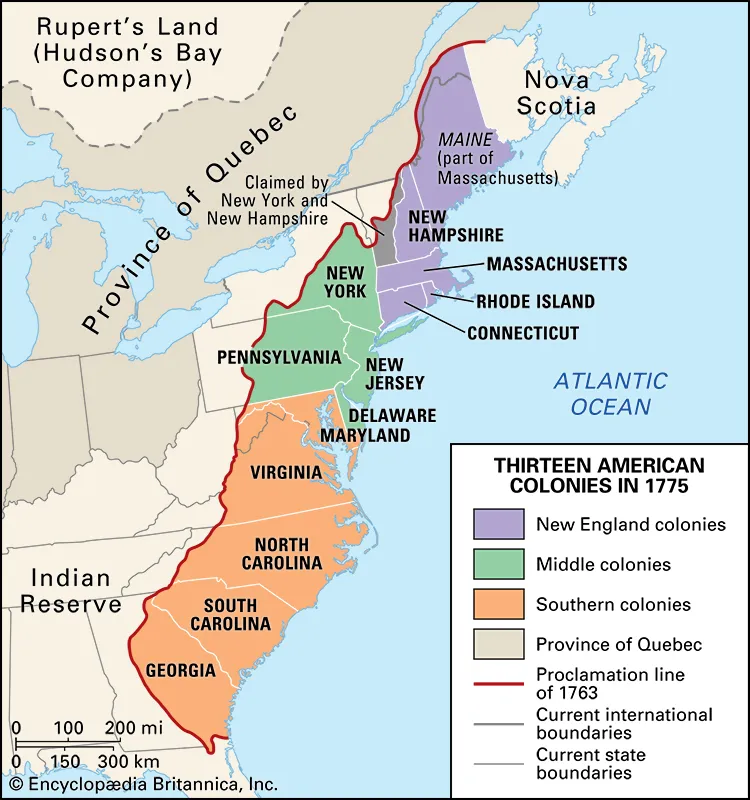
However, slavery did not have the same impact everywhere in the colonies. The South had far and away the largest number of slaves—Virginia having the most—to farm the labor-intensive crops their economies were built on. On the other hand, though every colony did have slaves, some had far fewer than others. New England by and large had the fewest slaves due to the Puritan values and hard-working Protestant ethic present in the region. There was also less use for slaves, as the crops grown there weren’t as labor-intensive. The Middle colonies did have more slaves than New England, but still less than the South. In the breadbasket colonies—and sometimes in New England—African slaves were often working for artisans or other skilled workers rather than being forced to pick crops in the South. It is important to note that even in the South, the use and significance of slavery was not the same. While Virginia and South Carolina (and Maryland to an extent) had a high number of slaves, Georgia and North Carolina were the outliers. Georgia’s journey to accepting slavery saw a move from its initial purpose as a buffer between the Spanish empire and the British colonial holdings to an area where people began to settle, more so in the later part of the 17th century as compared to the enthusiastic and rapid settlement and colonization of areas in the Chesapeake. The last to be officially considered a colony, Georgia initially banned slaves, though that was soon reversed. Following that, however, it quickly became home to one of the largest slave populations in the 13 British colonies. In fact, the high number of slaves in the Southern colonies led to several languages from which English borrows words, including Gullah. North Carolina, though, did not have such a large use for slaves. Home to the poorer classes, its inhabitants were considered to be anti-rules and anti-government. Due to the nature of the population—of which many were former indentured servants—and the lack of an abundance of wealthy landowners, the colony never had the same number of African slaves as the other Southern colonies.
In the end, it was a complex number of factors that shaped how each colony adopted slavery. However, those same differences created deep wounds between the states following the American Revolution—wounds that festered for decades and ultimately culminated in the American Civil War.
- Regional Differences Among American Colonies
- Regional Differences Among American Colonies
- https://georgiastudies.gpb.org/c7-s1
- The Mid-Atlantic
- https://eji.org/report/transatlantic-slave-trade/mid-atlantic/
- Slavery in Colonial America
- https://www.battlefields.org/learn/articles/slavery-colonial-america
- A Brief Overview of the Trans-Atlantic Slave Trade
- https://www.slavevoyages.org/blog/-brief-overview-of-the-transatlantic-slave-trade/154
- Encyclopædia Britannica, Inc.