
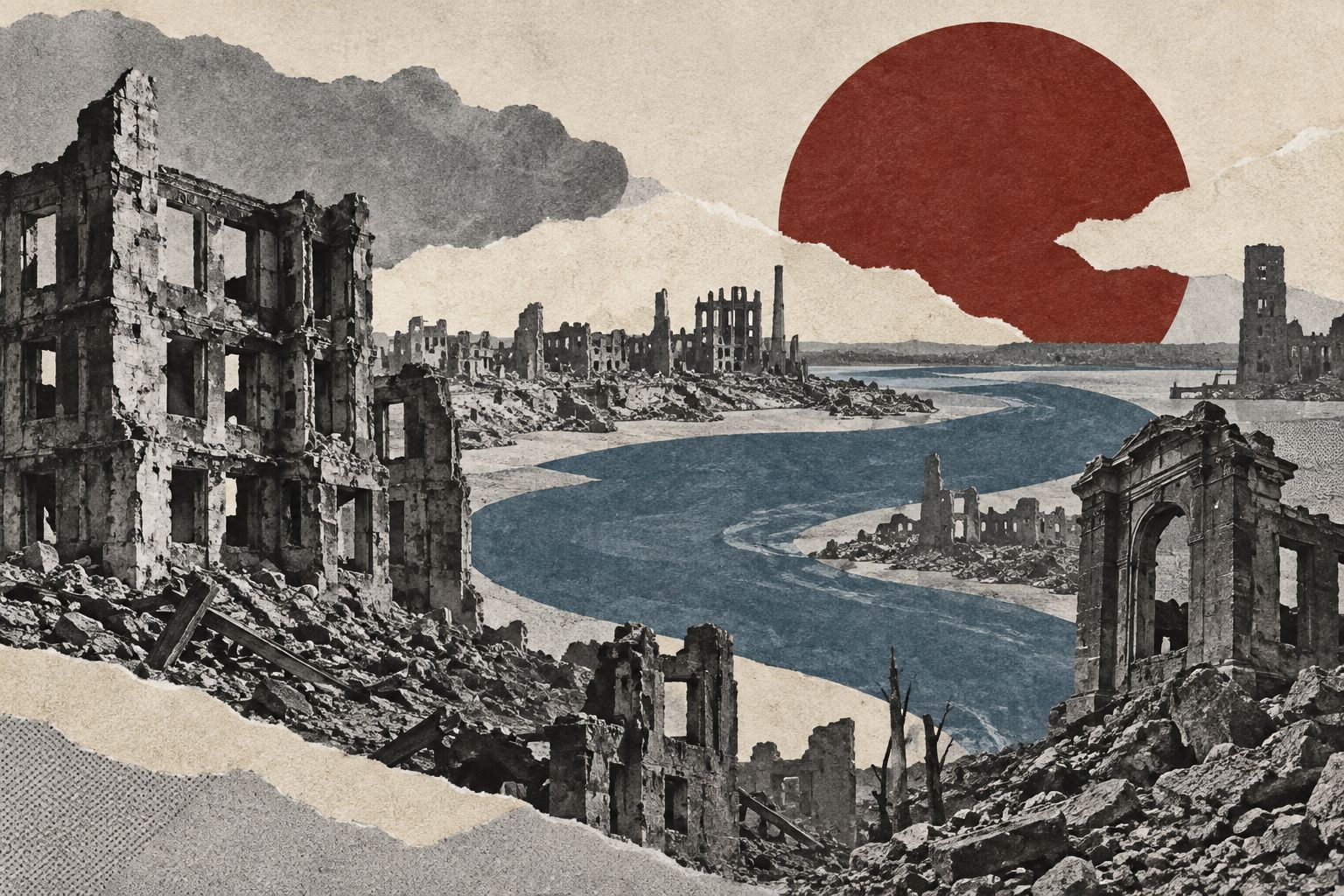
efore Stalingrad became a symbol, it was a city. People worked in its factories, raised families in its neighbourhoods and crossed a river that connected their lives to the wider country. In the summer of 1942, that ordinary world stood in the path of a German offensive.
Remembering the battle only as an encounter between two armies leaves too much out. Stalingrad was also a catastrophe for civilians, a test of supply and endurance, and a place where decisions taken far away were experienced one ruined street at a time.
A city on the river
The German summer campaign aimed toward the oil resources of the Caucasus. Stalingrad stood on the Volga, a major transport artery, and on the flank of that advance. Its factories and river traffic gave it practical importance; its name gave it political weight.
There was no simple separation between these purposes. Capturing the city could interrupt Soviet communications and protect a wider offensive. Yet the effort to secure it drew German formations into a protracted struggle, far from their starting positions and dependent on vulnerable lines of supply.
Life among the ruins
Heavy air attacks in late August transformed large areas into ruins. Destruction did not make the city easy to capture. Broken buildings offered cover, and familiar streets became a landscape of isolated positions. The battle would be measured in factories, stairwells and river crossings.
As German forces pushed into Stalingrad, Soviet defenders held increasingly narrow areas near the river. Fighting at close quarters limited some of the advantages of coordinated armor and air power. Positions could change hands repeatedly without bringing a clear decision.
A city is more than a position on a map. THE QUESTION AT THE HEART OF THIS ESSAY
For civilians, the battle meant far more than watching armies pass. Bombardment destroyed homes and services. People sought shelter, tried to find food and water, or attempted to leave. Accounts of military endurance should not obscure the vulnerability of those caught in the same landscape.
Beyond the turning point
While fighting continued inside the city, Soviet commanders prepared a different kind of operation. Instead of simply driving the Germans back through the ruins, they planned to strike the forces guarding the extended flanks of the German advance.
Operation Uranus began on 19 November 1942. Soviet attacks north and south of Stalingrad broke through Axis positions, including sectors held by Romanian forces. Within days, the attacking formations met near Kalach, closing a ring around the German Sixth Army and other troops.
German resistance ended in stages. Friedrich Paulus surrendered on 31 January 1943; the remaining northern pocket capitulated on 2 February. Stalingrad did not end the war. Vast battles and immense suffering still lay ahead.
For the city’s survivors, victory was not a return to the world that had existed before. Rebuilding meant reconstructing homes and industry amid the absence of people who would never return. The military turning point and the human catastrophe belong to the same history.
-
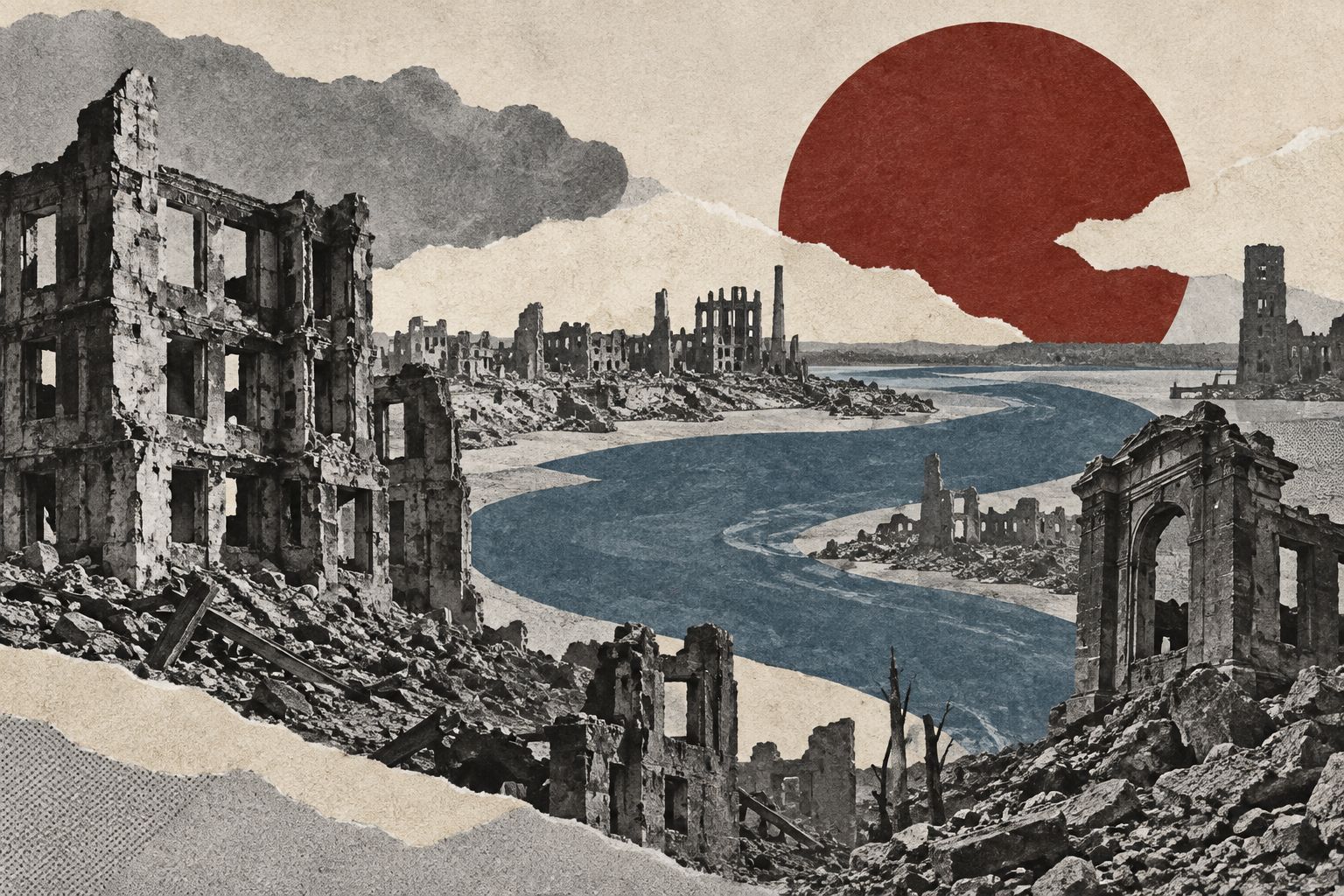
- An illustration of the essay’s themes, not a historical photograph.